Orlando, FL Contractor Insurance
8:30am - 5:00pm Mon-Fri
Will Reply in 15min*
A single slip-and-fall on a job site in Baldwin Park or a burst pipe during a kitchen remodel in Winter Garden can generate claims that run well into six figures. For contractors working across the Orlando metro area, the right insurance setup isn't just a checkbox for licensing: it's the financial barrier between a thriving business and a devastating lawsuit. Whether you're a roofing crew dealing with summer storms or an electrical contractor wiring new builds near Lake Nona, your coverage needs to account for Florida-specific regulations, Orange County permitting rules, and the unique risks that come with Central Florida's climate. This guide breaks down the core policies, bonding requirements, and certificates that Orlando contractors need to operate legally and protect their bottom line. From
general liability and workers' comp to tools coverage and commercial auto, each policy fills a specific gap that personal insurance simply won't cover.
Essential Insurance Policies for Orlando Contractors
Your insurance portfolio isn't one policy: it's a stack of coverages, each designed to handle a different type of financial exposure. Missing even one layer can leave you personally liable for costs that would otherwise be covered. Here's how the essential policies break down for contractors operating in the Orlando area.
General Liability: Protection Against Bodily Injury and Property Damage
General liability (GL) is the foundation of any contractor's insurance program. It covers third-party bodily injury, property damage, and advertising injury claims. If a homeowner trips over your materials on a remodel in College Park, or your tile work damages a client's hardwood flooring, GL responds to those claims.
Florida's minimum coverage sits at $300,000, but that number rarely satisfies real-world requirements. The industry standard for Orlando commercial projects is $1 million per occurrence and $2 million aggregate, and most general contractors or property managers will require those limits before they'll hand you a subcontract. The good news: upgrading from the state minimum to those higher limits typically adds only $100 to $300 per year to your premium. That's a small price for the ability to bid on larger jobs.
Workers' Compensation: Florida State Requirements for the Construction Industry
Florida takes workers' comp seriously for construction businesses. The state requires construction employers to carry workers' compensation if they have even one employee, including part-time staff. Sole proprietors and partners in construction can exempt themselves, but that exemption doesn't extend to anyone on your payroll.
Here's a bright spot for 2026: the Florida Office of Insurance Regulation approved a 6.9% statewide decrease in workers' comp rates for new and renewal policies this year. That said, your actual premium still depends heavily on your payroll, class codes, and claims history. A painting contractor with a clean loss record will pay far less per $100 of payroll than a roofing company with prior claims. Keep your payroll records accurate and your subcontractor certificates on file: audit risk still lives in payroll, class codes, and subcontractor documentation.
Commercial Auto Insurance for Business Vehicles and Trailers
If you're hauling tools, towing trailers, or driving a wrapped van between job sites in Orlando, your personal auto policy won't cover an accident that happens during business use. Most personal policies exclude commercial activity entirely, which means a fender-bender on I-4 while heading to a job could leave you uninsured.
Commercial auto covers liability, collision, and comprehensive damage for vehicles used in your business. It also extends to hired and non-owned vehicles, which matters if an employee uses their personal truck for a supply run. Contractors running box trucks, flatbeds, or vehicles carrying heavy equipment should pay attention to cargo and trailer coverage, since standard commercial auto doesn't always include attached equipment. Talk to your agent about scheduled equipment endorsements if your trailer carries generators, compressors, or welding rigs.

By: AJ Leibell
President of Bellken Insurance Group
Meeting Orlando and Orange County Licensing Requirements
Orange County and the City of Orlando both require proof of insurance before issuing contractor permits. Understanding what you need before you show up at the building department saves time and prevents delays on active projects.
Proof of Insurance for Local Permitting Processes
Orlando's permitting offices require a current Certificate of Insurance (COI) as part of the licensing and renewal process. For state-licensed contractors, you'll need to name the Construction Industry Licensing Board (CILB) as the certificate holder on your COI to keep your license active. Locally licensed contractors typically name Orange County or the City of Orlando as the certificate holder, depending on jurisdiction.
Your COI needs to show your GL limits, workers' comp status, and any additional coverage the project owner requires. Most insurance agents can issue a COI within 24 hours, but don't wait until the morning of your permit appointment. Request it a few days early so you can verify the certificate holder name and policy dates are correct.
Surety Bonds vs. Insurance: Understanding the Difference
Contractors often confuse surety bonds with insurance, but they serve completely different purposes. Insurance protects you from financial loss. A surety bond protects the project owner or the public if you fail to meet your contractual or legal obligations.
Florida requires certain contractor license types to post a surety bond, and Orange County may require additional bonding for specific permit categories. If you don't complete a job or violate building codes, the bond company pays the claim, then comes after you for reimbursement. You're personally on the hook. Think of a bond as a line of credit backed by your reputation, not a safety net. Your bond premium is based on your credit score, financial statements, and experience, so contractors with strong financials pay significantly less.
Not every policy covers the same risks, and confusing general liability with professional liability is one of the most common mistakes we see among Orlando contractors.
Comparison Chart: General Liability vs. Professional Liability
| General Liability | Professional Liability | |
|---|---|---|
| What it covers | Bodily injury, property damage, advertising injury | Errors, omissions, design flaws, faulty advice |
| Typical claimant | Client, visitor, or bystander injured on the job | Client alleging your work or plans caused a loss |
| Example | Painter drops a ladder on a homeowner's car | Engineer's structural design leads to foundation failure |
| Required by Florida? | Yes, for licensed contractors | No, but often required by contract |
| Common limits | $1M per occurrence / $2M aggregate | $1M per claim / $1M aggregate |
| Who needs it most? | All contractors | Design-build firms, engineers, architects, consultants |
NA plumbing contractor who installs fixtures needs GL. A plumbing engineer who designs the system layout needs professional liability. Many design-build firms in Orlando carry both.
Managing Risk in the Central Florida Climate
Orlando's subtropical climate creates risks you won't find in most northern markets. Afternoon thunderstorms, hurricane season from June through November, and high humidity all affect job sites, stored materials, and equipment. Your insurance program should account for these regional exposures.
Inland Marine Insurance for Tools and Mobile Equipment
Despite the name, inland marine has nothing to do with boats. It covers tools, equipment, and materials in transit or stored at job sites, which is exactly where theft and storm damage tend to happen. A framing crew's nail guns, a tile contractor's wet saws, or an HVAC technician's recovery machines: none of these are covered under a standard GL policy.
Most Florida contractors pay between $300 and $1,200 per year for inland marine coverage, depending on the total value of scheduled equipment. If you're running a small operation with $15,000 in tools, you're likely on the lower end. Larger outfits with laser levels, excavation attachments, or diagnostic equipment will pay more but still get strong value relative to replacement costs.
Builder's Risk Insurance for New Construction and Renovations
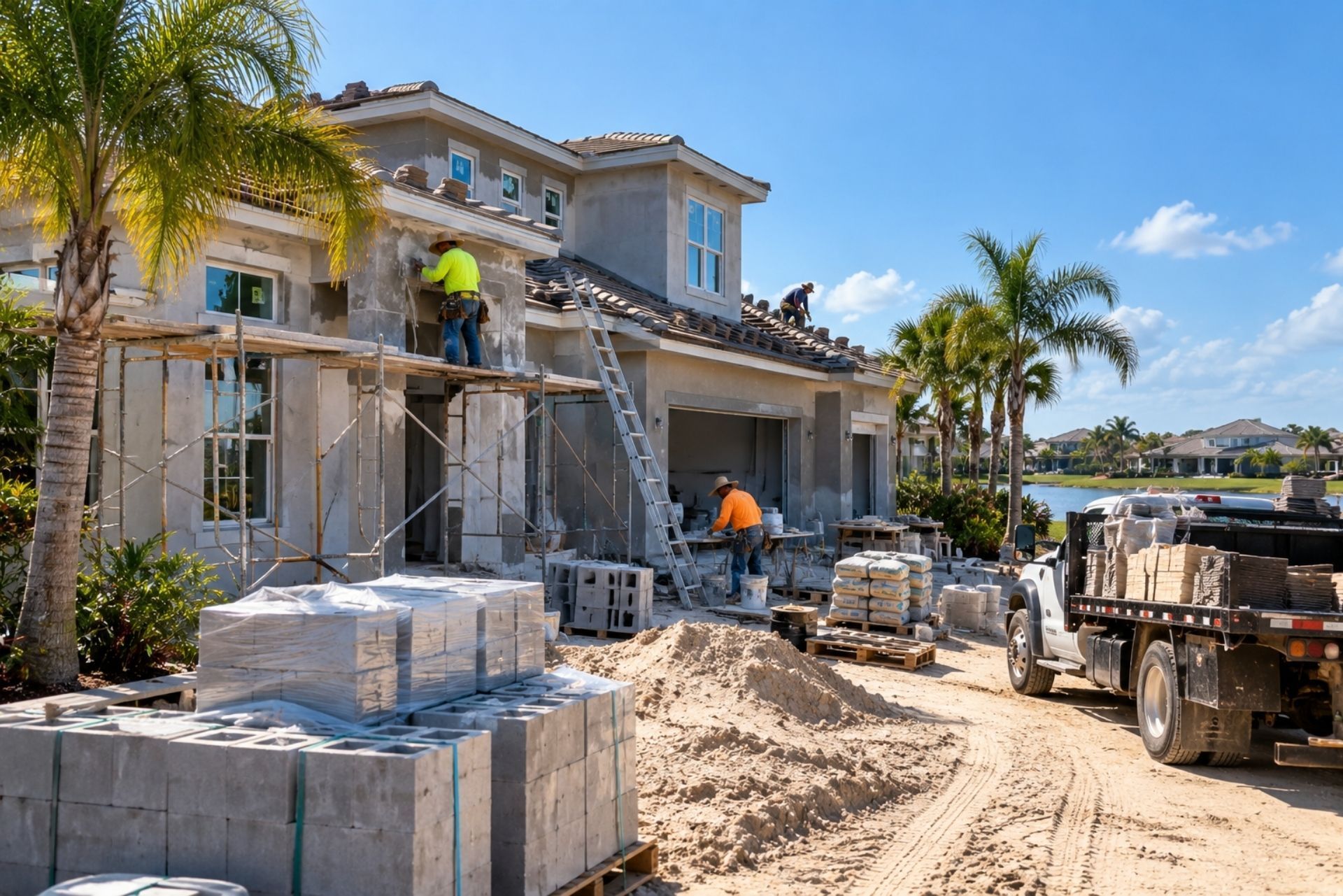
Builder's risk covers the structure itself during construction, along with materials and fixtures on site. If a summer storm rips off a partially completed roof in Windermere, or vandals damage a spec home under construction in Apopka, builder's risk responds where GL does not.
Policies are typically written for the duration of the project and cover fire, wind, theft, and vandalism. Flood is usually excluded and must be purchased separately, which is worth noting for projects in flood-prone zones near the St. Johns River or in parts of east Orange County. The project owner or general contractor usually purchases builder's risk, but subcontractors should confirm coverage exists before starting work. If it doesn't, you could be left holding the bill for damaged materials you've already installed.
Frequently Asked Questions About Orlando Contractor Insurance
These are the questions we hear most often from contractors across Central Florida who are sorting out their coverage for the first time or adjusting policies as their businesses grow.
Do I need insurance if I'm just a one-person handyman business?
If you're doing work that doesn't require a state contractor's license (jobs under a certain dollar threshold), you may not be legally required to carry GL. But one accident on a client's property could wipe out your savings. Most handyman businesses carry at least a $500,000 GL policy. Workers' comp exemptions are available for sole proprietors in construction, but you'll need to formally file for that exemption with the state.
How much does a typical general liability policy cost in Orlando?
Premiums vary based on your trade, revenue, and claims history. A low-risk contractor like a painter or handyman might pay $500 to $1,200 per year for a $1M/$2M policy. Higher-risk trades like demolition can see general liability premiums starting between $2,500 and $8,000 annually (https://www.excavatinginsurancepartners.com/post/how-much-does-insurance-cost-for-a-demolition-contractor), while a full insurance package for a roofing crew typically ranges from $650 to over $1,200 per month (https://businessinsurancecost.com/by-industry/contractors). Your loss history and years in business also affect pricing.
Does my personal auto insurance cover my work truck?
Almost certainly not. Personal auto policies exclude vehicles used for business purposes. If you're hauling materials, driving between job sites, or have your company name on the vehicle, you need a commercial auto policy. Using personal coverage for business driving is one of the fastest ways to have a claim denied.
What happens if I hire a subcontractor who doesn't have their own insurance?
Florida law may treat uninsured subcontractors as your employees for workers' comp purposes. That means their payroll gets added to your policy at audit, increasing your premium. If they're injured on the job, the claim hits your policy. Always collect a current COI from every sub before they set foot on your site.
How do I get a Certificate of Insurance to show a client?
Contact your insurance agent or broker and request a COI. You'll need to provide the certificate holder's name and address, which is usually the client, general contractor, or property manager. For state-licensed contractors, remember to list the CILB as the certificate holder on your state licensing COI. Most agents can issue certificates the same day.
Making the Right Choice for Your Business
Contractor insurance in Orlando isn't a single product: it's a combination of policies tailored to your trade, your crew size, and the types of projects you take on. A solo handyman needs a different setup than a GC running a 20-person framing crew. The common thread is that gaps in coverage create personal financial exposure that can end a business overnight.
Start by securing general liability and workers' comp, since those are non-negotiable for licensed contractors in Florida. Then layer in commercial auto, inland marine for your tools, and builder's risk as your project scope demands. Keep your COIs current, bond requirements satisfied, and subcontractor documentation organized.
If you're unsure where your coverage stands or you're starting a new contracting business in the Orlando area, getting a professional review of your insurance needs is the smartest first step. You can get a quote tailored to your specific trade and operation size, so you know exactly what you're covered for before the next job starts.
About The Author:
AJ Leibell
As President of Bellken Insurance Group, I’m dedicated to providing clients with clarity, confidence, and protection through personalized insurance solutions. With years of experience serving individuals and businesses, my focus is on building lasting relationships and ensuring every client receives dependable coverage that fits their goals and budget.
Your Personal Insurance Solutions





Choose Bellken Insurance Today
Choice and Transparency
The independent insurance agents are completely different from the insurance company agents. They work for themselves and not for the company. They sell their own policies to the customers and that is why they are called independent agents.
Your Advocate
Independent agents are more inclined to provide you with the best coverage that is suitable for your needs. They can also help you with your budget and make sure that you get the best coverage at an affordable price.
Lifetime expert advice
Independent insurance agents are insurance experts who have a deep understanding of the industry. They are able to clearly explain complex policies or rate changes, and are well-versed in the inner workings of various insurance companies. With years of experience dealing with multiple insurance providers, they are reliable sources of
Our Testimonials
Hear from our clients

This review goes directly to Aj Leibell. Being foreign is not easy to found people that are willing to help you, he was extremely helpful and had so much patience that I can only be grateful. This company trust me, is the best in customer service and prices.
Francisca Diaz Cortez

On behalf of my mom, who dealt with AJ Leibell to resolve an issue. She would highly recommend this agency due to their professionalism, kindness and going over and above what was necessary.
Jessica Moore

Bayview Tower Condo Association is located in Miami, Florida, we are a community comprise of 36 units. Bellken has been our insurance agent for the last 10 years. During all these years our insurance needs have been met by Bellken in a professional and trustworthy manner. The entire staff is courteous, knowledgeable and attentive to detail.
Bayview Tower

We have used their services for over 17 years and are quite satisfied with the support provided. EH
Ed Hays
REQUEST A QUOTE
Get an insurance quote online today!
Get started today!
Speak directly with a Bellken Insurance specialist today!
Prefer to speak with an agent now?