Tampa, FL Commercial Property Insurance
8:30am - 5:00pm Mon-Fri
Will Reply in 15min*
Most Tampa business owners don't find out what their property policy covers until the morning after a storm, standing in a flooded stockroom with an adjuster who keeps saying "excluded." After years of reviewing commercial claims along the Gulf Coast, one pattern holds: the businesses that recover fastest made their coverage decisions months before hurricane season, not during a watch.
This guide breaks down
commercial property insurance in Tampa, FL: buildings, contents, windstorm, business income, deductibles, and costs. It covers the coverage pieces adjusters care about, the fine print that sinks claims, and the pricing realities of a Florida market that's shifting again in 2026. Whether you own a strip center off Dale Mabry, run a dental office in Westchase, or lease warehouse space near the Port of Tampa, the same rules apply. Your policy is a contract written before the loss. Read it like one.
Understanding Commercial Property Insurance in Tampa
Commercial property insurance pays to repair or replace the physical assets your business depends on after a covered loss. That includes the building itself if you own it, plus the equipment, furniture, inventory, and improvements inside. Fire, theft, vandalism, burst pipes, and wind are typical covered causes, depending on how the policy is written.
Tampa adds layers most of the country doesn't deal with. Hillsborough County sits in a hurricane corridor, carries significant storm surge exposure along Tampa Bay, and has a building stock that ranges from 1920s Ybor City brick to brand-new tilt-wall construction. Each of those details changes how carriers price and structure your coverage.
The market itself is also moving. The state's insurer of last resort has been shrinking as private carriers return: Citizens' overall policy count dropped from a peak of 1.4 million in 2023 to roughly 336,000 by late 2026. Here's what that means for you: more options, more competition, and more variation in policy wording between carriers. Two quotes with similar premiums can respond very differently to the same claim.
One thing to keep in mind: commercial property insurance is not liability coverage. If a customer slips in your lobby, that's a general liability claim. If your roof peels off and rain destroys your server room, that's property. Most small businesses bundle both into a
Business Owner's Policy, but the coverages work independently.

By: AJ Leibell
President of Bellken Insurance Group
Core Coverage: Protecting Your Building and Business Personal Property
Every commercial property policy splits your assets into two buckets, and getting the split wrong is one of the most common reasons claims come up short. Landlords and tenants often both assume the other party insured the same items.
Building Coverage and Permanent Fixtures
Building coverage protects the structure and anything permanently attached to it. That generally includes walls, roof, foundation, built-in HVAC systems, plumbing, electrical wiring, permanently installed fixtures, and often outdoor signs, fencing, and parking lot lighting, subject to policy limits.
If you own your building, set your limit based on replacement cost, not market value or what you paid. A Seminole Heights office building bought for $800,000 in 2019 might cost far more to rebuild today because of labor, materials, and Florida Building Code requirements. That code issue matters: older buildings often need upgrades during repairs, which is why Ordinance or Law coverage is worth adding. Without it, the cost to bring your rebuild up to current wind code may fall on you.
Tenants need to read their lease. If you paid to build out a restaurant kitchen or install custom millwork in a salon, those tenant improvements may be your responsibility to insure, even though they're attached to the landlord's building.
Business Personal Property and Inventory
Business Personal Property, or BPP, covers the movable stuff: computers, furniture, tools, machinery, inventory, supplies, and stock. For a lot of Tampa businesses that lease their space, BPP is the main property coverage they buy, and standard policies for small businesses in leased spaces typically run $400 to $1,200 a year.
The catch is valuation. Actual cash value policies subtract depreciation, so a five-year-old commercial espresso machine might pay out a fraction of what a new one costs. Replacement cost coverage pays to buy new, which is almost always worth the higher premium.
Seasonal businesses should look at peak season endorsements. A Tampa retailer stocking up before the holidays may carry double its normal inventory in November, right as everyone forgets storm season technically runs through the end of that month.
Wind is the single biggest variable in Tampa property insurance. It drives premium, deductible structure, and which carriers will even quote your building. Ignore it and the rest of your policy barely matters.
Many Florida commercial policies either exclude windstorm entirely or treat it with a separate, higher deductible. Some property owners carry a standard policy for fire and theft plus a separate wind-only policy. Others get wind included with a named storm deductible. You need to know which setup you have before June 1, not after a cone appears over the Gulf.
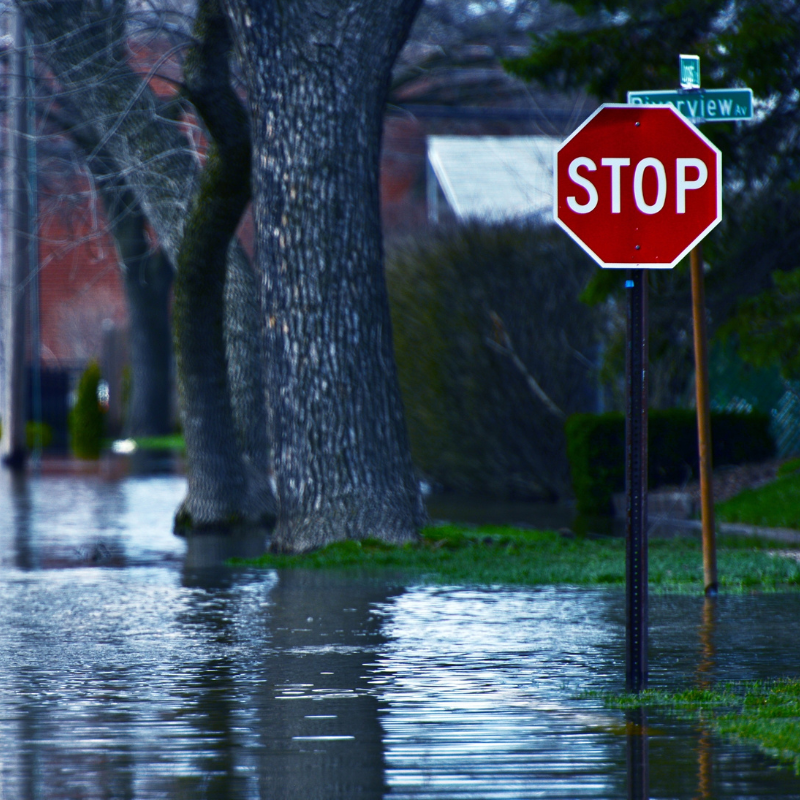
Flood is a separate problem. Storm surge and rising water are almost never covered under a standard commercial property policy, wind included or not. Businesses near Bayshore, Davis Islands, Harbour Island, or the low-lying areas of South Tampa need separate flood coverage through the NFIP or a private flood carrier. The NFIP's commercial building limits are often too low for larger properties, so excess flood is worth pricing.
Picture this: a hurricane brings both wind and surge to a Channelside restaurant. The roof damage is covered under the wind policy. The four feet of water in the dining room is flood. If the owner only carries wind, the adjuster will separate the damages, and the water losses go unpaid. These "wind versus water" disputes are some of the most contested claims in Florida.
Practical steps for wind protection:
- Confirm wind is included or that you carry a standalone wind policy
- Document your property with dated photos and video before every storm season
- Keep mitigation paperwork like roof permits and shutter invoices in a cloud folder
- Price flood separately even if you're outside a high-risk zone
Business Income Insurance: Keeping the Lights On After a Loss
Rebuilding a damaged building takes months. Rent, payroll, loan payments, and utility bills don't stop while contractors are backordered. Business income coverage replaces the net income you would have earned and pays continuing expenses while your operation is shut down after a covered property loss.
The key word is "covered." Business income only triggers when the underlying cause of loss is covered under your property policy. If your policy excludes wind and a hurricane closes your shop, your income loss isn't covered either. This is one of the most painful gaps we see in post-storm claims.
Watch these policy details closely:
- Waiting period: Most policies don't start paying until 48 or 72 hours after the loss
- Period of restoration: Coverage typically ends when the property could reasonably be repaired, not when customers come back
- Extended period of indemnity: Adds coverage for the slow ramp-up after you reopen
- Extra expense: Pays for temporary locations, rented equipment, or expedited shipping
Civil authority coverage deserves attention in Tampa. When officials order evacuations or close the causeways, businesses that took no physical damage can still lose days of revenue. Civil authority provisions can respond, but usually only when there's physical damage nearby and for a limited time window.
Dependent property coverage helps when your loss comes from someone else's damage. A Brandon bakery that relies on one flour supplier, or a medical practice inside a hospital campus, could lose income from a fire at a property they don't own.
Comparing Policy Types and Coverage Scopes
The causes of loss form on your policy determines what's actually covered. Two buildings with identical limits can have very different protection depending on which form the carrier uses. Most Tampa businesses should know where they sit on this chart.
| Feature | Basic Form | Broad Form | Special Form |
|---|---|---|---|
| Coverage approach | Named perils only | Named perils, expanded list | All risks unless excluded |
| Fire, lightning, explosion | Yes | Yes | Yes |
| Windstorm and hail | Yes, if not excluded | Yes, if not excluded | Yes, if not excluded |
| Water damage from pipes | No | Limited | Yes |
| Theft | No | No | Yes, with limits |
| Burden of proof | You prove a named peril | You prove a named peril | Insurer proves exclusion |
| Typical cost | Lowest | Moderate | Highest |
That burden of proof row matters more than most owners realize. Under special form, the insurer has to show an exclusion applies. Under basic and broad form, you have to prove the damage came from a listed peril, which gets messy when causes overlap.
Packaging choices matter too. A Business Owner's Policy bundles property, business income, and general liability for smaller operations like consulting firms, boutique retail, and small offices. Larger or higher-risk properties, such as manufacturing plants, multi-tenant buildings, and restaurants with heavy cooking exposure, usually need a standalone commercial package policy with custom limits.
How Deductibles Work for Tampa Business Owners
Your deductible is the portion of each loss you pay before the policy responds. In Florida, it's often the biggest out-of-pocket risk you carry, and many business owners don't understand how theirs is calculated until a claim forces the math.
Flat Dollar vs. Percentage Deductibles
Flat dollar deductibles are straightforward: $2,500, $5,000, or $10,000 per occurrence, regardless of property value. These usually apply to all other perils, like fire, theft, and water damage.
Percentage deductibles work differently. Hurricane deductibles in Florida are commonly set at 2%, 5%, or 10% of the building's insured value, not the claim amount. On a building insured for $1.5 million, a 5% hurricane deductible means you're absorbing the first $75,000 of damage. A 10% deductible means $150,000.
Here's the trade-off. Raising your hurricane deductible from 2% to 5% lowers your premium, sometimes noticeably. On the flip side, you're betting you'll have enough cash or credit to cover a much larger loss in a bad storm year. If you take the higher deductible, set aside the premium savings in a reserve account so the gap doesn't catch you unprepared. Lenders on commercial mortgages may also cap the deductible you're allowed to carry, so check your loan documents before choosing.
The Hurricane Deductible Trigger
Not every windy day triggers your hurricane deductible. The policy language defines exactly when it applies, and the wording varies between carriers.
Most Florida policies trigger the hurricane deductible when the National Hurricane Center issues a hurricane watch or warning for any part of Florida, then keep it in effect for a set period after the storm moves on, often 72 hours. Some policies use a "named storm" trigger instead, which can kick in for tropical storms too. That's a meaningful difference. A tropical storm that tears off part of your roof might fall under your flat deductible with one carrier and your 5% named storm deductible with another.
Florida also generally applies the hurricane deductible once per calendar hurricane season for residential properties, but commercial policies don't always follow that pattern. Ask your agent directly whether your deductible resets with each storm. In a two-hurricane season, that answer can be worth six figures.
Pricing in Tampa isn't random, even when it feels like it. Carriers model your property's vulnerability, replacement cost, and location, then translate that into a rate per $100 of insured value. For inland Tampa properties, commercial premiums typically fall between $0.90 and $1.45 per $100 of Total Insured Value, so a retail unit with $1 million in TIV runs about $9,000 to $14,500 a year. Coastal properties often price higher.
Market conditions are helping in 2026. The state regulator has said it's receiving a flood of rate decrease requests and expects more aggressive cuts heading into 2027. For businesses still with Citizens, regulators approved a commercial rate structure with a minimum change of -5% and a maximum cap of 15% for class-rated and special-class business. That cap protects against sharp spikes, though it doesn't guarantee a decrease.
The Impact of Building Age and Construction Type
Construction class is one of the heaviest rating factors. Masonry and fire-resistive concrete buildings typically price better than wood frame, and they perform better in both fire and wind. A 2015 concrete block office in Westshore with a newer roof and modern electrical will usually rate far better than a 1960s frame building in Sulphur Springs.
Roof age is the factor that surprises owners most. Many carriers restrict coverage or settle roof claims on actual cash value once a roof passes a certain age, and some won't write wind at all on older roofs. Replacing a 20-year-old roof can open up carriers that wouldn't quote you before. Electrical panels, plumbing material, and occupancy type matter too. A restaurant with open-flame cooking pays more than an accounting firm in the same building.
Mitigation Discounts for Wind-Resistant Features
Florida requires insurers to offer credits for verified wind mitigation features. These credits can produce real savings on the wind portion of your premium, and they're often the fastest way to lower costs on an existing building.
Features carriers look for:
- Roof-to-wall connections like hurricane clips or straps
- Secondary water resistance under the roof covering
- Impact-rated windows and doors or approved shutters
- Roof deck attachment using enhanced nailing patterns
- Roof shape, with hip roofs generally rating better than gable
You'll need a commercial wind mitigation inspection from a qualified inspector to document these features. Keep the report on file and send it at every renewal. Carriers don't apply credits automatically, and owners lose money every year because nobody resubmitted the form.
Common Questions About Tampa Business Insurance
Do I need commercial property insurance if I lease my space? Yes, in most cases. Your landlord's policy covers their building, not your equipment, inventory, or tenant improvements, and most leases require you to carry your own coverage.
Does commercial property insurance cover flood damage in Tampa? No, standard policies exclude flood and storm surge. You'll need a separate flood policy through the NFIP or a private carrier.
How much does business property insurance cost in Tampa? Small businesses in leased spaces often pay $400 to $1,200 a year for basic building and contents coverage. Building owners usually pay based on insured value, with inland properties often running $0.90 to $1.45 per $100 of TIV.
What's the difference between a hurricane deductible and a regular deductible? A regular deductible is usually a flat dollar amount. A hurricane deductible is typically a percentage of your building's insured value, which can be much larger.
Can I get off Citizens and into a private carrier? Many Tampa businesses have, as private carriers return to the market. Ask your agent to shop your renewal, especially if your building has recent roof work or mitigation features.
Will my business income coverage pay during an evacuation order? Possibly, through civil authority coverage, but usually only if there's physical damage nearby and only for a limited period. Read that provision carefully.
Making the Right Choice for Your Property
Getting commercial property coverage right in Tampa comes down to a few decisions made well before storm season: insuring buildings at true replacement cost, choosing replacement cost for contents, confirming wind and flood are both addressed, and making sure business income coverage follows the same perils as your property policy. Deductibles deserve real math, not a guess based on the lowest premium.
The 2026 market gives Tampa owners more leverage at renewal than they've had in years, with carriers competing again and rates easing. That's the moment to fix old gaps, submit mitigation reports, and compare policy wording side by side rather than just price.
If you want a second set of eyes on your current coverage or need quotes from multiple carriers, a local agent can walk through your building, lease, and deductible options with you. Request your quote and get your protection lined up before the next storm forms in the Gulf.
About The Author:
AJ Leibell
As President of Bellken Insurance Group, I’m dedicated to providing clients with clarity, confidence, and protection through personalized insurance solutions. With years of experience serving individuals and businesses, my focus is on building lasting relationships and ensuring every client receives dependable coverage that fits their goals and budget.
Your Personal Insurance Solutions



Choose Bellken Insurance Today
Choice and Transparency
The independent insurance agents are completely different from the insurance company agents. They work for themselves and not for the company. They sell their own policies to the customers and that is why they are called independent agents.
Your Advocate
Independent agents are more inclined to provide you with the best coverage that is suitable for your needs. They can also help you with your budget and make sure that you get the best coverage at an affordable price.
Lifetime expert advice
Independent insurance agents are insurance experts who have a deep understanding of the industry. They are able to clearly explain complex policies or rate changes, and are well-versed in the inner workings of various insurance companies. With years of experience dealing with multiple insurance providers, they are reliable sources of
Our Testimonials
Hear from our clients

This review goes directly to Aj Leibell. Being foreign is not easy to found people that are willing to help you, he was extremely helpful and had so much patience that I can only be grateful. This company trust me, is the best in customer service and prices.
Francisca Diaz Cortez

On behalf of my mom, who dealt with AJ Leibell to resolve an issue. She would highly recommend this agency due to their professionalism, kindness and going over and above what was necessary.
Jessica Moore

Bayview Tower Condo Association is located in Miami, Florida, we are a community comprise of 36 units. Bellken has been our insurance agent for the last 10 years. During all these years our insurance needs have been met by Bellken in a professional and trustworthy manner. The entire staff is courteous, knowledgeable and attentive to detail.
Bayview Tower

We have used their services for over 17 years and are quite satisfied with the support provided. EH
Ed Hays
REQUEST A QUOTE
Get an insurance quote online today!
Get started today!
Speak directly with a Bellken Insurance specialist today!
Prefer to speak with an agent now?